






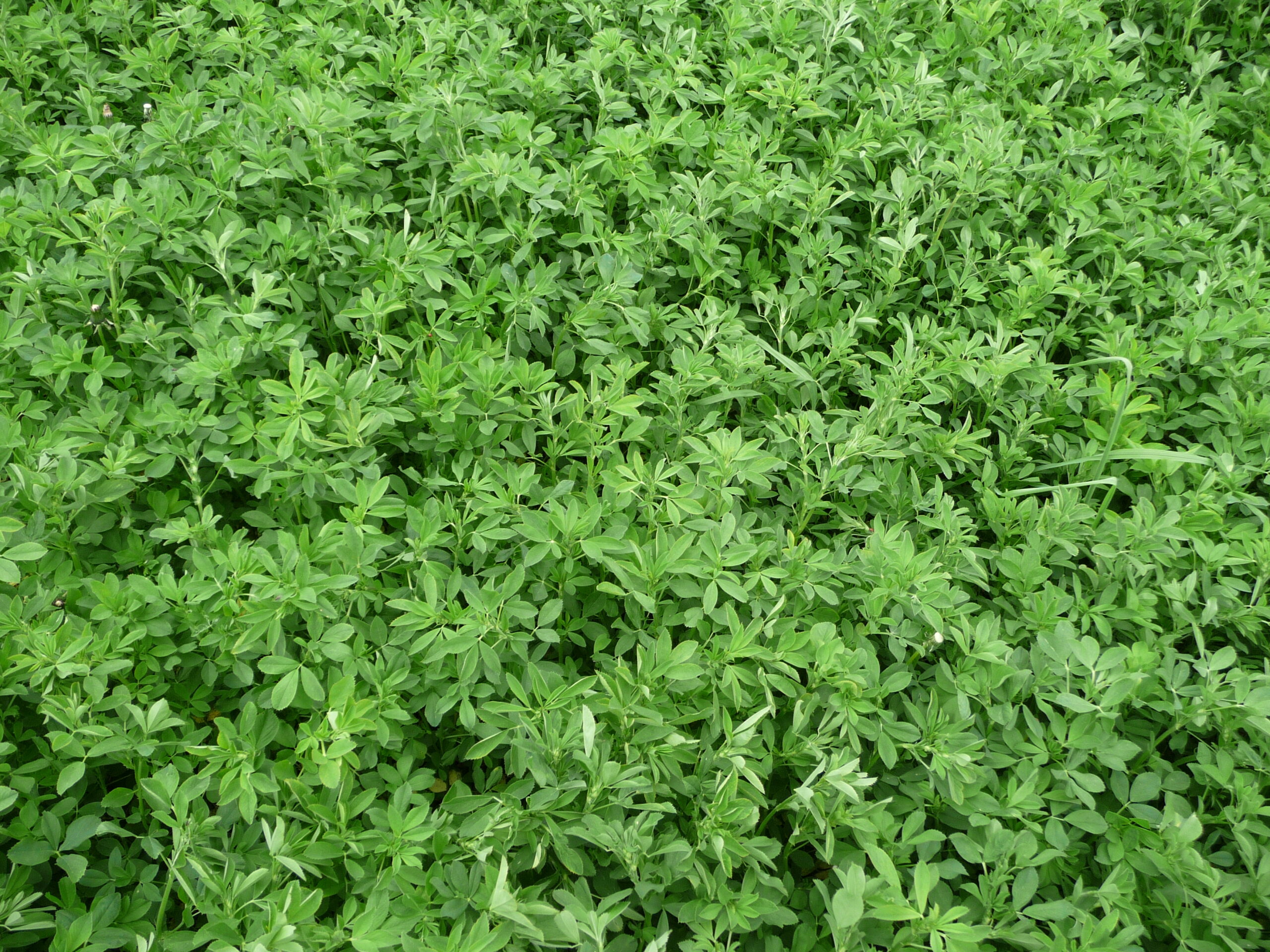
Thanks to an investment from Novalait and its partners, Université Laval researcher Caroline Halde has launched a new dairy production research project to evaluate more digestible alfalfa cultivars for Quebec dairy farms. The project had three components:
- Evaluate different more digestible alfalfa cultivars under Quebec bioclimatic conditions to compare their yield, nutritional value and persistence.
- Evaluate the impact of using more digestible alfalfa on dairy cow performance.
- Evaluate the economic impact of alfalfa use on Quebec dairy farms.
Feed efficiency: what impact on milk production?
Increasing feed efficiency is one of Novalait’s research priorities. The selection of this research project on more digestible alfalfa is part of the means to meet this challenge. Improving the digestibility of alfalfa increases its energy content and potentially extends the harvesting period without affecting its nutritional value. The aim of the project was therefore to test the performance of more digestible cultivars in the field and in cow feed.
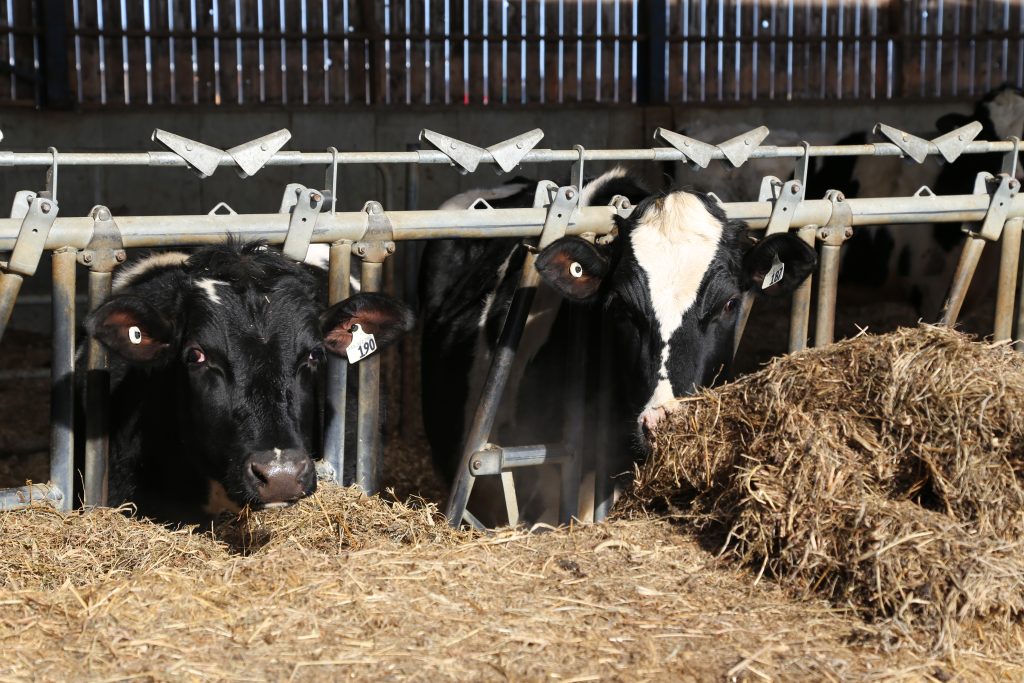
A total of eight cultivars were tested over three years in experimental plots, representing 1,600 alfalfa samples harvested at two stages: early budding and 10% flowering. Cultivars with enhanced digestibility were either conventionally bred or genetically modified (GM). GM alfalfa proved more digestible than controls after the first year of production.
GM alfalfa cultivars with reduced lignin content can thus increase the digestibility of the forage ration. They can also make it possible to postpone harvesting by a few days, while maintaining the same digestibility.
It is possible to reduce metabolizable protein intake without adversely affecting dairy cow performance.
In a second project not involving GM alfalfa, the research team also measured the impact of reduced metabolizable protein intakes in cows fed an alfalfa-rich ration balanced for three main amino acids: histidine, lysine and methionine. A total of eight cows were fed different rations over four 21-day periods. The results were promising; feed intake and corrected milk production were equivalent despite lower protein intakes when ration energy was maintained at an adequate level. It is possible to reduce metabolizable protein intake without adversely affecting dairy cow performance, provided that energy and essential amino acid requirements are met. This feeding strategy improves nitrogen utilization efficiency while maintaining milk component production and reducing nitrogen excretion. The techno-economic analysis will show whether it is profitable to use this type of alfalfa. This new knowledge will help dairy producers make the right choices.

